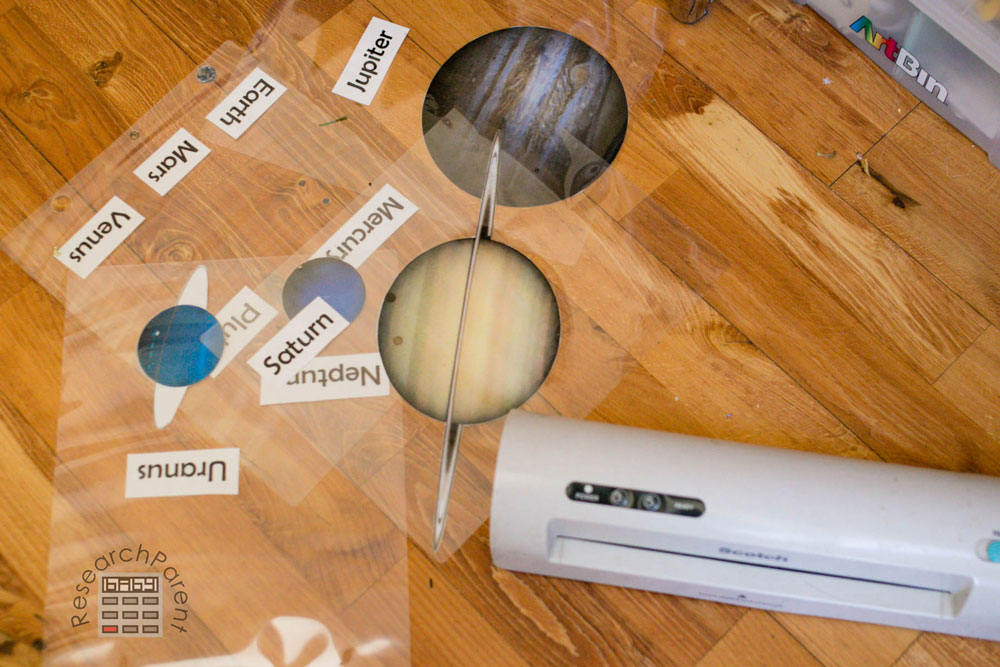
Over 7 years ago, one of the first homeschool posts I ever shared was this Relative Size of the Planets activity when my 7th grader was back in Kindergarten. (Seriously, where does time go?!) Back in the day, when I had one fewer child and a lot more free time, I did all the calculations so that I could scale the planets down to fit on a piece of paper. This allowed my children to see how all the planets compared to each other in size. Just this past week, I decided to brush the cobwebs off this activity for the homeschool co-op science class that I’m teaching. However, this time around, I knew that I really wanted to include Pluto in the comparison, so I made a bonus sheet including this tiny, much-loved dwarf planet.
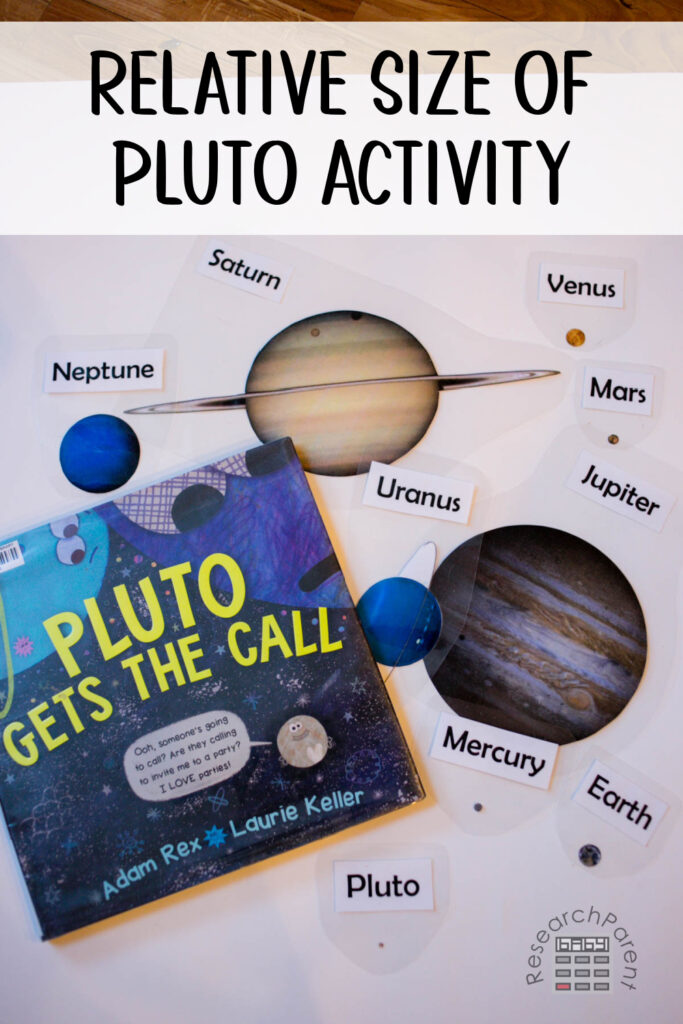
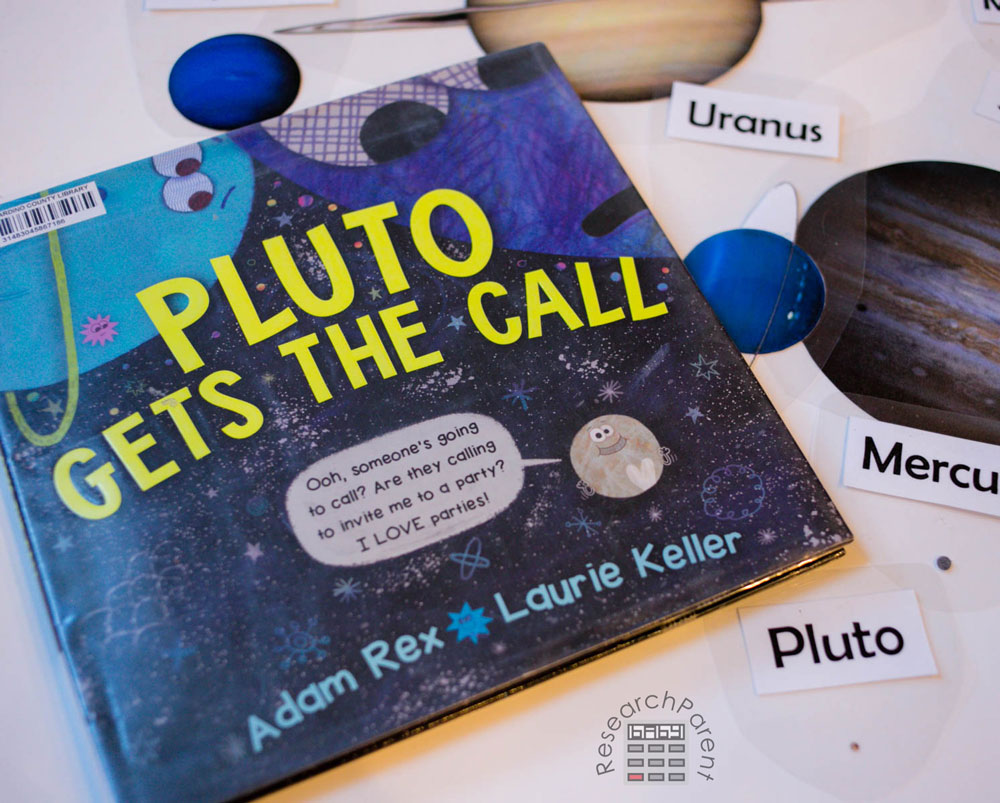
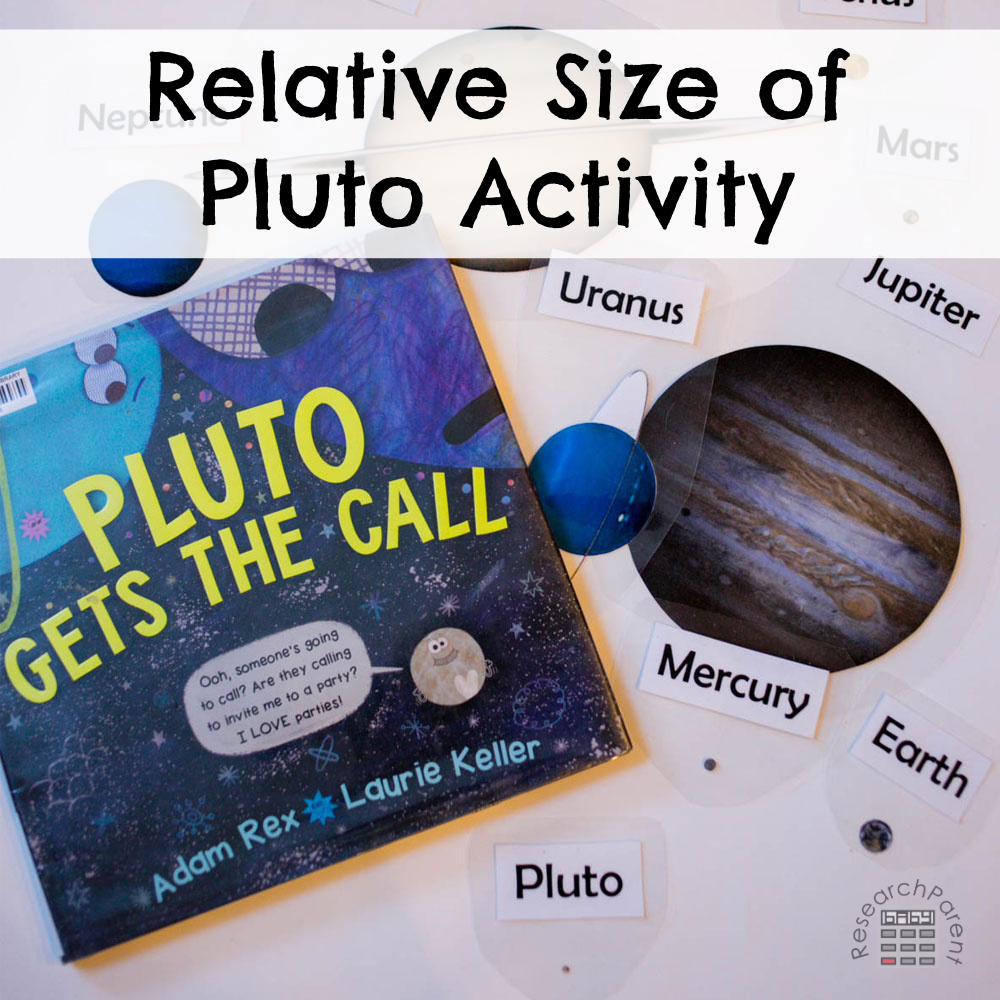
The reason why I wanted to include Pluto was that I also wanted to read my co-op class this hilarious book told from the point of view of the demoted planet. (My full review of Pluto Gets the Call is here.) As I read the book in class, I passed around the laminated planets for the kids to compare. This let them experience firsthand how much smaller Pluto is than all the others.
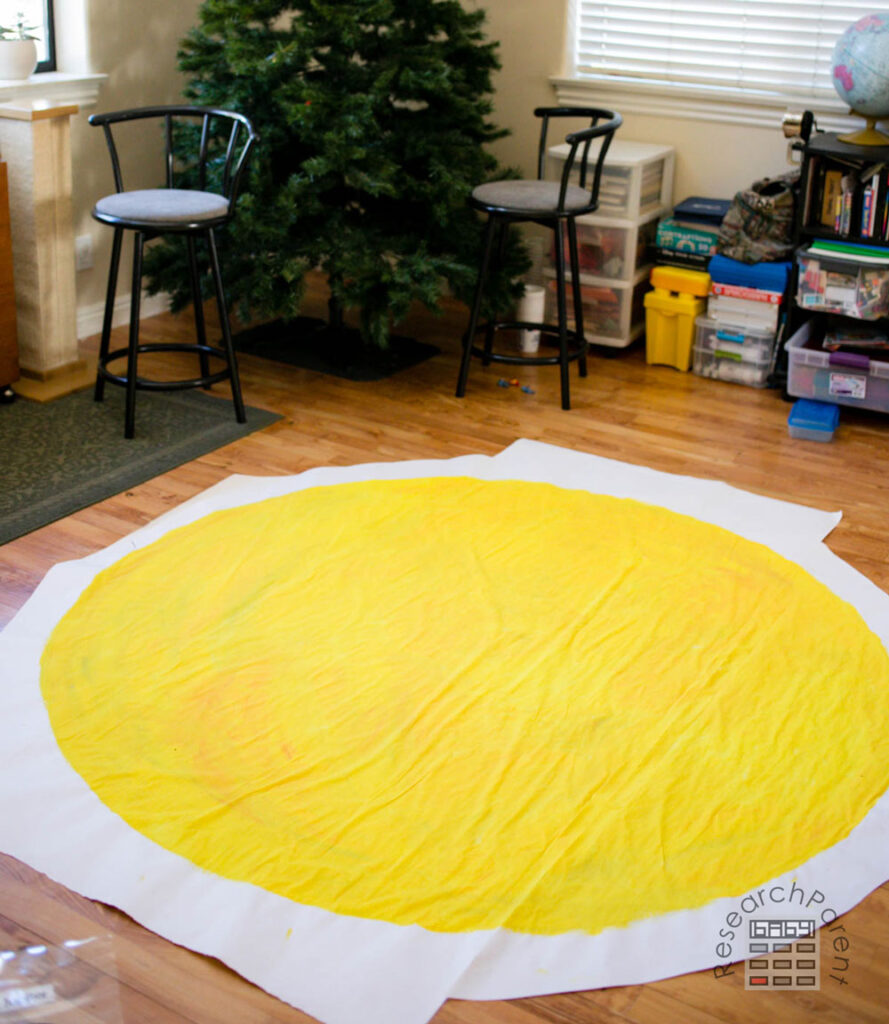
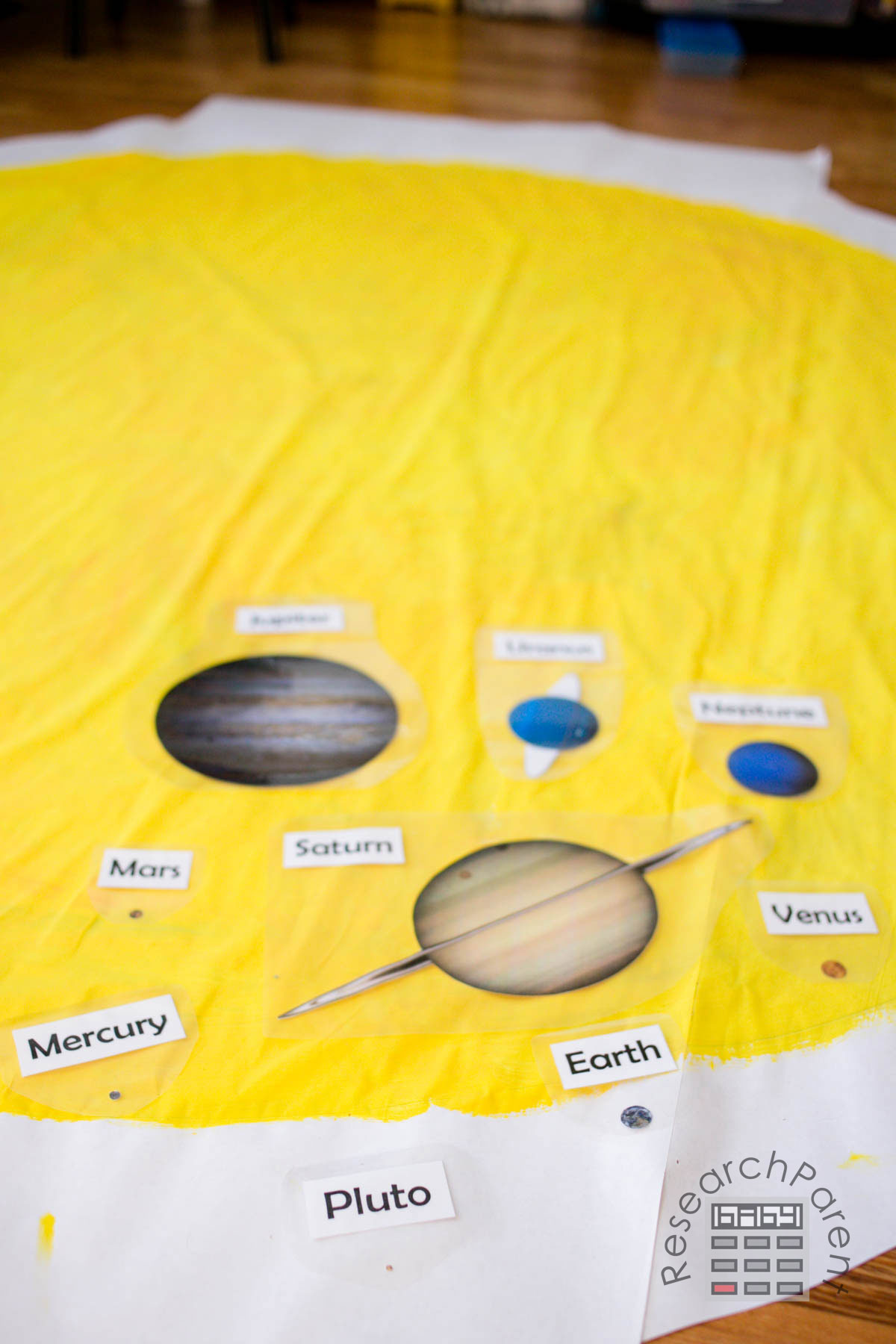
Even more impressive than the relative size of the planets to each other is their relative size compared to the Sun. My younger kids and I spent about 30 minutes measuring and painting a Sun a few days before class. In the co-op, I had the students guess how big they thought the Sun would be with their arms before I unveiled our creation for dramatic effect. When I originally did this Sun activity, I just accepted the fact that the whole Sun was not going to fit on my butcher paper. This time around, I wanted to make a big impact, so I used two pieces of butcher paper side by side to fit the whole thing. The results were pretty impressive.
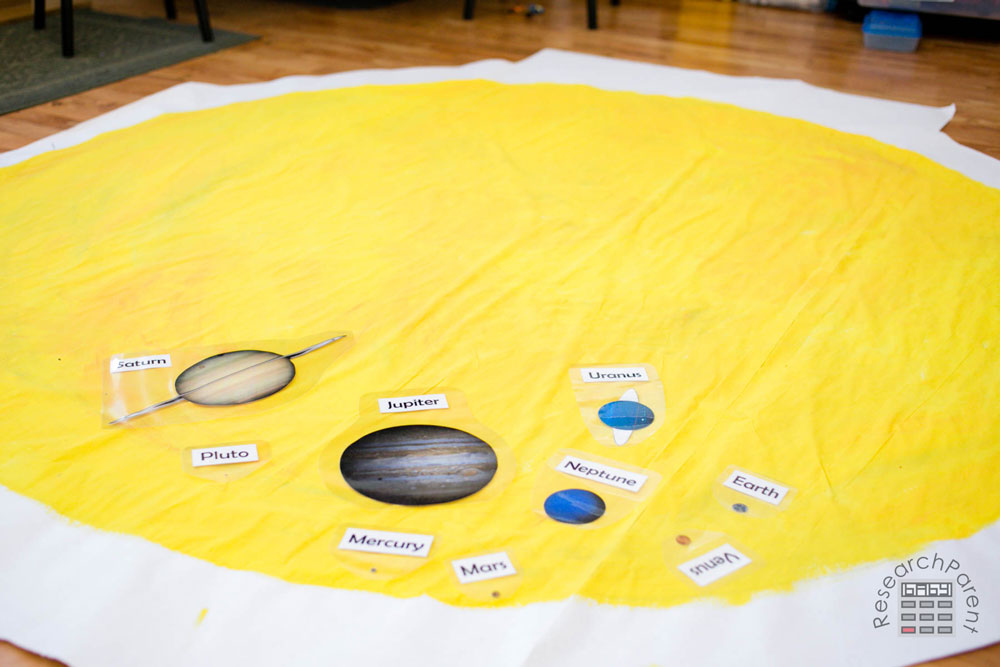
Laying the planets, especially Pluto, on top of the Sun shows how incredibly small all of the planets are compared to our favorite star. Pluto may be the only dwarf planet in the group, but all of the planets are dwarfed by this monstrosity.
Relative Size of Pluto Details
Recommended Age Range: Preschool, Kindergarten, Elementary, Middle School
Time Required: about an hour altogether to laminate all the planets and measure and paint the Sun
Difficulty: Easy
Cost: Free printable planets. Butcher paper and paint for the Sun require a couple dollars in used supplies. Might be a bigger investment if you don’t already have butcher paper and paint lying around.
Materials
- Free printable major planets
- Free printable Pluto
- Butcher paper
- Yellow paint (we also added a little red paint to add some fun variation)
- Laminating sheets
Supplies
- laminator
- scissors
- paintbrushes
- Optional: Pluto Gets the Call (this book complements the activity so well!)
Instructions
- First, print out all of the major planets and Pluto.
- Cut out the planets and labels, then laminate them and cut out the laminated pieces.
- Follow the instructions on this post to make a Sun on the same scale. The radius should be 33″.
Have fun getting a sense of the scale of our solar system!
Related Links
Science Activities for Kids
Astronomy Activities for Kids
Robotics Activities for Kids




 Michelle has a PhD in Engineering from Stanford University and a Bachelor's Degree from the California Institute of Technology.

Do you remember what scale you used for these planets compared to their real-life counterparts?
Hi Kirsten! What a fantastic question, I can’t believe I didn’t think to include that in the post and no one has ever asked me before! I just looked at my spreadsheet that I created all those years ago and the scale factor is 830 million (830,000,000) or 1/830,000,000 if you look at it the other way!
Hi. This is great! Thank you. How could we figure the relative distance between the planets based on your scaling? (I feel like i should be able to sort this based on your previous answer, but my non-math brain is starting to smoke out my ears ;))
Hi Brenda! I know I’ve done this calculation in the past with my own kids, because I remember giving them landmarks to tell them how far apart we should place the planets like “at the post office” and “at the hardware store”, but I couldn’t find it. However, I just redid the calculation really quickly and I think this is right… If you were to print out my planets and call the Sun the starting point, then Mercury would be about 70 meters away, Venus would be 130 meters, Earth would be 180 meters, and Mars would be 270 meters. At this point, I’m going to convert to miles, since it’s easier to visualize. Jupiter would be about half a mile from the Sun, Saturn would be about 1 mile, Uranus would be about 2.2 miles, and Neptune would be about 3.4 miles. I can’t believe I never made a post with the distances! I’m glad the information now exists somewhere on this site so that I don’t have to calculate it again in the future! 😂 I hope that’s helpful! Sorry fo the delay!
If I may, after using this project last year at my library (thank you so much; it went great until some younger patrons stole some planets). I found a wonderful book about the scales and misconceptions of space. Check out The Planets Are Very, Very, Very Far Away: A Journey Through the Amazing Scale of the Solar System by Mike Vago.
Hi Kristen! Thank you for sharing that reference. I just checked my library catalog and they have it on order, so hopefully I’ll be able to see it before too long! 🤞 I was wondering if you knew about this website: https://joshworth.com/dev/pixelspace/pixelspace_solarsystem.html You scroll to the side to see the whole solar system if the Moon were the size of a pixel. My kids really enjoyed the commentary during the scrolling trip. 😉